My great grandmother, Sally Prowse (1843-1935), loved the Cornish wild flowers that she saw around her home near Lamorna and St Buryan. Sally was brought up at Rosemodress, and later lived at Tregiffian. If she went to school, it would probably have been the school in a room over the post office in Lamorna, at twopence a week (Mitchell, 1977), because the church school in Lamorna did not open until 1881 (Corbet, 2019). Her walk from Rosemodress to school would have brought her through Tregiffian and down Well Lane. The spectrum of wild flowers that she would have seen on her way to school has changed; a high proportion of the more conspicuous plants nowadays are alien species that have come to the area since her schooldays.
More recent changes in Britain as a whole have been summarised by Preston et al. (2002) who compared the findings of a survey made between 1987 and 1999 with those of a survey made in the 1950s. Each survey recorded wildflower species present in 10 x 10 km grid squares, and a change index was calculated for each species to allow for changes in recording effort between surveys. Native species and archaeophytes (species introduced before 1500) have decreased, whereas neophytes (species introduced since 1500) have increased. The losses are attributed to eutrophication (increased levels of nutrients such as nitrogen and phosphorus), climate warming and habitat change due to agricultural intensification and changes in farming practice, and the newcomers to the arrival of alien plants from overseas. In Cornwall much of our botanical richness is due to plants growing on Cornish hedges, and the increased regularity of flailing may have contributed to our losses. A major group that proved especially vulnerable to loss is the axiophytes, defined by the BSBI as ‘species that arouse interest and praise when seen’. They are indicators of ecologically valuable habitat (https://bsbi.org). Margetts & David discuss floristic changes in West Cornwall up to 1980.
Keeping track of losses is not easy. The disappearance of cherished axiophytes may be noted, but losses of common species are rarely recorded. It is easier to keep track of new arrivals, with the help of early lists, such as the manuscript flora of West Cornwall compiled by John Ralfs (1878-9) and bequeathed to the archives of the Morrab Library. The first three (1878-9) of his nine volumes concern flowering plants. Some plants that were absent or inconspicuous in Ralfs’ day have flourished here and are now conspicuous, and often unwelcome, components of the landscape.
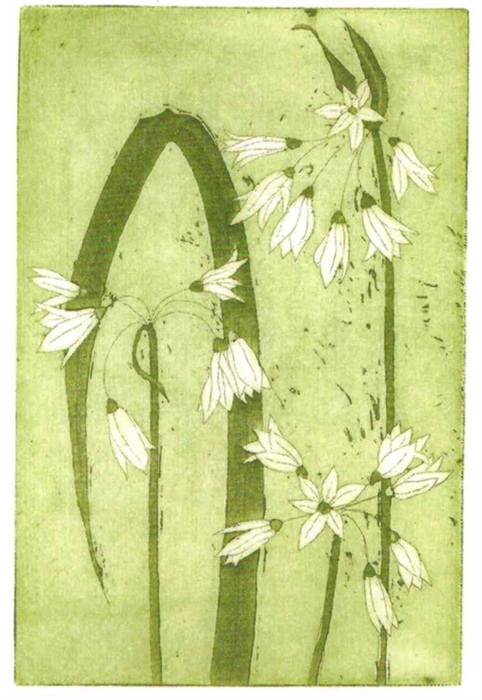
Fig. 1 Three-cornered leek, Allium triquetrum.
One of our most threatening invaders is the Mediterranean Three-cornered leek, Allium triquetrum (fig. 1), which now frequently dominates roadside verges. Its flowers often form a white line at the base of a roadside Cornish hedge, contrasting with the blue line of flowering bluebells along the top of the hedge. It seems to overwhelm other vegetation. It was first recorded in UK 1847 (Stace & Crawley, 2015), and Ralfs gave only one locality for it (volume III: p. 308). It was already locally abundant in 1980 (Margetts & David, 1981).
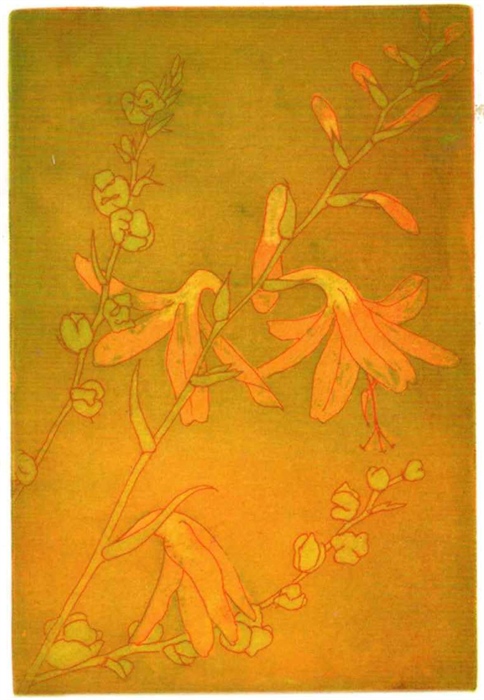
Fig. 2 Montbretia, Crocosmia x crocosmiiflora.
The orange-flowered lily Crocosmia x crocosmiiflora (fig. 2), already common in 1980 (Margetts & David, 1981), is now a very conspicuous element on roadsides and in waste land and moorland. It originated from South African species as a garden hybrid created in 1879 and was first recorded in the wild in the UK in 1907 (Stace & Crawley, 2015), so is not mentioned by Ralfs and was not seen by the young Sally Prowse.
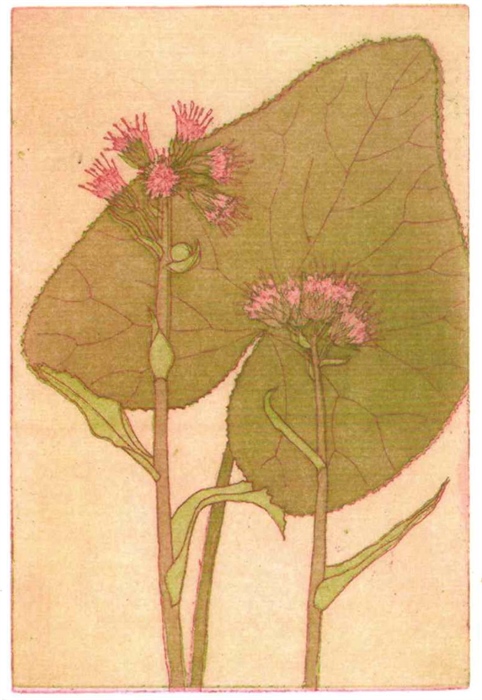
Fig 3 Winter heliotrope, Petasites fragrans.
Winter heliotrope, Petasites fragrans (fig 3), covers large areas of roadside and banks in this area, producing heads of scented flowers in winter or early spring. Originating in N Africa, it was first recorded in UK in 1835. It was common in Ralfs’ day, but has surely increased dramatically since then.
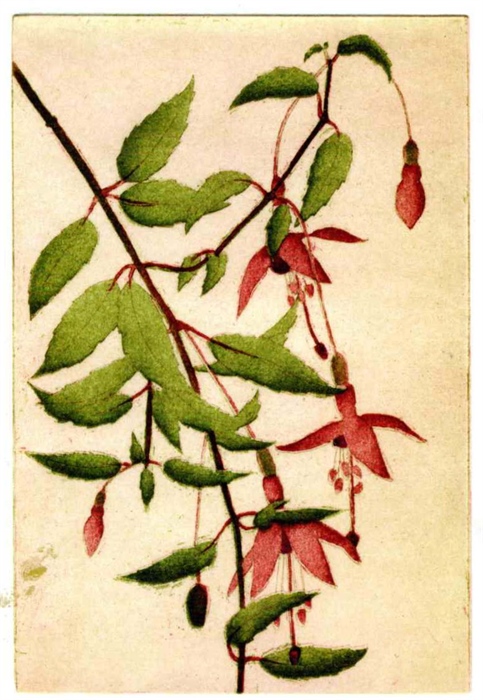
Fig. 4 Fuchsia, Fuchsia magellanica.
Fuchsia magellanica (fig 4) is a familiar sight in shrubberies and hedges. First recorded in the wild in UK in 1857 (Stace & Crawley, 2015), it is not mentioned by Ralfs. By 1909 Davey (p. 204) reports that F. ricartonii (now regarded as a form or variety of F. magellanica (Stace, 2020)) was ‘quite naturalized’ near Tintagel and ‘flourishing in roadside hedges between Penzance and Zennor’. By the 1920s it was already well known here, according to a relative’s memory. In 1980 it was ‘gradually increasing as a garden throw-out’ (Margetts & David, 1981). A large patch by the road from Boskenna Cross to St Buryan marks the site of a house occupied by Emma, great-grandmother’s eldest daughter (personal communication from Emma’s daughter Ethelwynn). Perhaps it had not yet been planted there when Sally was young.
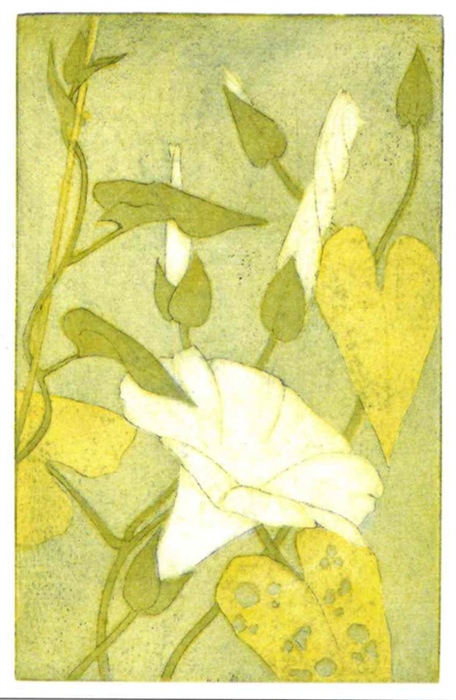
Fig 5 Large bindweed, Calystegia sylvatica.
The white trumpets of bindweed, now so abundant in hedges, waste places and gardens, have changed. In Sally Prowse’s schooldays they all belonged to the native hedge bindweed, Calystegia sepium, but now large bindweed, C. sylvatica (fig. 5), introduced from Southern Europe in 1863 (Stace & Crawley, 2015), which looks similar but has slightly larger flowers, is as common as our native species (French, 2020). Both species were common by 1980 (Margetts & David, 1981). If Sally Prowse returned today she would hardly notice the difference, because the two species look so alike.
Another species of Allium, a form of A. ampeloprasum known as Babington’s leek, produces tall flowering stems topped by clusters of bulbils. Its origin is unclear; it has not been recorded outside the UK, so it is one of the few plants that can be described as n endemic (confined to the UK) neophyte (first recorded in the UK after 1500) (Stace & Crawley, 2015). Ralfs (II:304) gives only 3 localities for it (as A. babingtonii), none of them near Penzance, and treats it as a native plant. A few decades ago it was rare enough to be listed in the Red Data Book of plant species of conservation concern (Perring & Farrell, 1983). In 1980 it was ‘increasing rapidly’ in West Cornwall (Margetts & David, 1981), and now it is abundant locally. It is thought to be a form of A. ampeloprasum; originally grown as a vegetable (Stace & Crawley, 2015), it is mentioned in Polwhele’s History of Cornwall (1806).
Since Ralfs’ time, some sources of alien plants have diminished in importance (such as contaminated grain or fleeces) but others have increased (such as distribution by motor traffic since the early 1920s) (Margetts & David, 1981). No doubt changes in our flora will continue, with climate warming and the further advance of invasive species such as three-cornered leek, Crocosmia and Petasites. Perhaps there will be new arrivals too.
I am grateful to Jenny Dearlove for helpful comments on a draft.
References
Corbet, S (2019) Pp. 14 in Corbet, S (ed.) Growing up in West Cornwall. Penwith Local History Group.
Davey, FH (1909) Flora of Cornwall. Penryn: F. Chegwidden. Reprinted in 1978 by EP Publishing Ltd, Wakefield, W Yorkshire.
French, CN (2020) A flora of Cornwall. Wheal Seton Press, Camborne.
https://bsbi.org
https://en.wikipedia.org/wiki/st_buryan. Accessed 2. xiii.26.
Margetts, LJ & David, RW (1981) A review of the Cornish flora 1980. Redruth: Institute of Cornish Studies.
Mitchell, S (1977) Recollections of Lamorna. Penzance: Headland Printers Ltd.
Perring, FH & Farrell, L, (1983) British Red Data Books: 1. Vascular plants (2nd edition), Lincoln, Royal Society for Nature Conservation.
Preston, CD, Telfer, MG, Arnold, HR, Carey, PD, Cooper, JM, Dines, RD, Hill, MO, Pearman, DA, Roy, DB & Smart, SM (2002) The changing flora of the UK. London: DEFRA.
Ralfs, J (1878-9) The flora of West Cornwall. Vols I-III.
Stace, C (2010) New flora of the British Isles. Third edition. Cambridge: Cambridge University Press.
Stace, CA & Crawley, MJ (2015) Alien plants. New Naturalist, London, HarperCollins.
Fig. 1 Three-cornered leek, Allium triquetrum.
Fig. 2 Montbretia, Crocosmia x crocosmiiflora.
Fig 3 Winter heliotrope, Petasites fragrans.
Fig. 4 Fuchsia, Fuchsia magellanica.
Fig 5 Large bindweed, Calystegia sylvatica.

Penwith Local History Group

Edited by
Sally Corbet
price £10
plus p&p